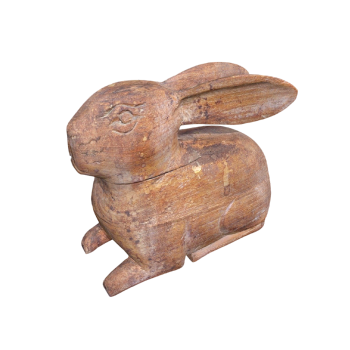
Wood Carved Rabbit Box

Wood Carved Rabbit Box
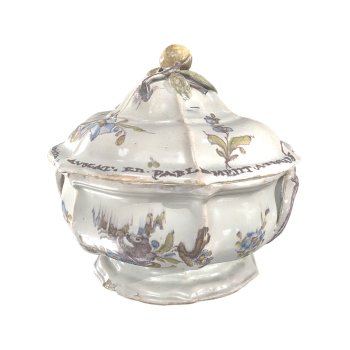
This is a decorative box or jewelry box with a lid that can be used to store small items or jewelry. The upper part of the box can be removed, revealing a hidden storage space. Hand-carved from solid wood, it retains the natural wood grain and copper luster, with a rustic folk art style.
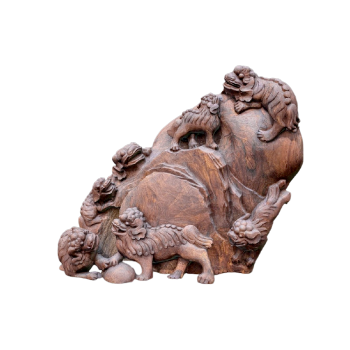
Wood carving "Lion Rock"

Wood carving "Lion Rock"

Chinese arts and crafts master Liang Fengzhu was produced in 2014 and is now collected in Liang Fengzhu Arts and Crafts Art Museum in Hengyang, China. The work is carved from natural wood, retaining the natural texture of the wood. The carving is fine, depicting the scene of many lions (which may mean "nine lions" or "too many lions and few lions") playing among the rocks, which is vivid and powerful. In traditional Chinese culture, the lion is a common object to ward off evil spirits and an auspicious symbol.
Wood carving "Christ by the Pillar"

Wood carving "Christ by the Pillar"

This sculpture is likely a wood-carved version of the "Christ by the Pillar", also often referred to as the "Son of Worry" or "Christ on Cold Stone". This sculpture depicts Jesus tied to a pillar (or sitting on a stone) after being whipped and before being crucified. He usually wore a crown of thorns and had his hands tied before him, with an expression of pain or contemplation, awaiting execution. This is a devotional theme common in Christian art, which aims to elicit strong empathy and emotional resonance from the viewer by depicting the physical pain and vulnerability of Christ.
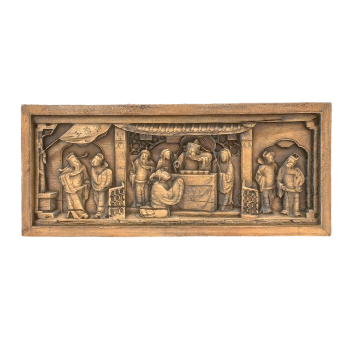
ancient chinese wood carving

ancient chinese wood carving

This is an ancient Chinese wood carving relief board, usually as a building component or part of furniture decoration, depicting a character story scene. This type of wood carving board is usually used to decorate the doors and windows of traditional Chinese buildings, screens, under the eaves, or inlaid on large furniture (such as sleeping beds and desk tables). The central area of the relief board depicts an interior scene that appears to be a family gathering, a trial, or a theatrical scene. Some sit in high positions, others bow down or stand, and there are other characters around watching. Such carvings are usually based on traditional historical stories and literary classics (such as Romance of the Three Kingdoms and Twenty-four Filial Piety).
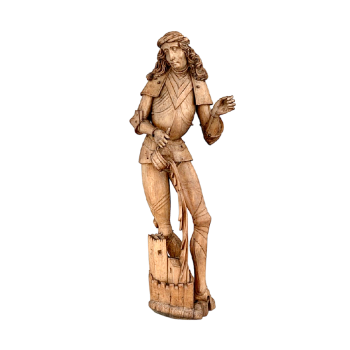
Wooden statue of St. Florian

Wooden statue of St. Florian

This is a wooden statue of Saint Florian. St. Florian is a Catholic saint. He is honored as the chief saint of firefighters, chimney cleaners and winemakers. He is also regarded as the chief guarantor against fires and floods. The statue depicts St. Florian as an image of a Roman soldier. He usually holds a bucket or basin, symbolizing his role in dousing flames and protecting people from fire hazards. Legend has it that in the 4th century AD, St. Florian used a bucket of water to put out a fire and save a city, which made him the patron saint of firefighters.
Wood Carving: Antelope Family

Wood Carving: Antelope Family

The sculpture depicts a heartwarming scene of a female antelope with a baby antelope. The mother antelope holds her head high, while the baby antelope looks down and seems to be grazing or nursing. This style of carving is common in medieval style or African tribal art. It has abstract and smooth lines, focusing on the simple beauty of animal form. It is a decorative ornament, suitable for home decoration.
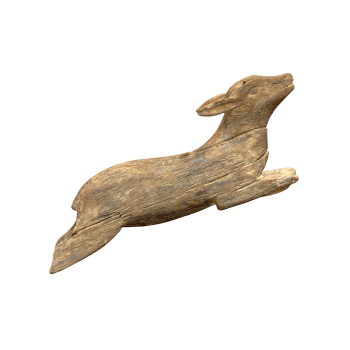
wood carving deer

wood carving deer

The sculpture is carved from solid wood. It depicts a deer in a jumping or running position with its head held high.
Wood statue of Emperor Kazimiri III the Great

Wood statue of Emperor Kazimiri III the Great

This is a statue of King Casimir the Great. Kazimierz III was the last Polish king of the Piast dynasty and the only monarch in Polish history to be awarded the title of "Great Emperor. The king in the statue is dressed in silver armor, with a gold cloak over his shoulders and lined with purple fabric. He wears a crown in the shape of precious stones and lilies, and holds the symbols of kingship-the scepter and the kingship ball (cross holy ball). It is a Gothic wood carving with facial features similar to his image on a sarcophagus at Wawel Cathedral. This statue was in 1930.
Painted wood bust of St. Gereon

Painted wood bust of St. Gereon

St. Gereon was an officer in the Legion of Thebes who refused to carry out orders to persecute Christians and was said to have been beheaded and martyred in Cologne. This wood bust of the guardian saint of Cologne was probably made by Hermann Kessel around 1683/88 and is now hidden in the Catholic parish church of St. Gillian in Cologne (originally the college church).
Buddha Head Statue of Sakyamuni, Founder of Buddhism

Buddha Head Statue of Sakyamuni, Founder of Buddhism

The statue depicts the head of Buddha Sakyamuni, the founder of Buddhism, with a meditative look, closed eyes, a bun on the top of the head (called "Ushnisha", symbolizing wisdom) and a spiral bun (called "snail hair").
Wood Carving of Buddha Head

Wood Carving of Buddha Head

This is a statue of the Buddha's head, depicting the head of Buddha Sakyamuni, the founder of Buddhism, with a meditative look, closed eyes, a bun on the top of the head (called "Ushnisha", symbolizing wisdom) and a spiral bun (called "snail hair"). The statue presents a wood-like carved texture and brown tone distressed effect, with a strong Zen or Southeast Asian Balinese style, designed to create a peaceful and peaceful atmosphere.
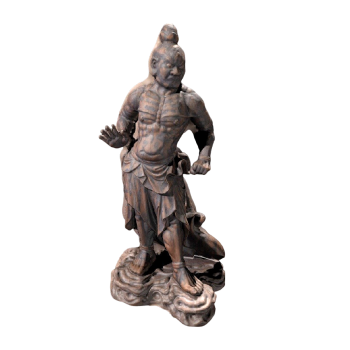
King Kong Hercules Wood Carving

King Kong Hercules Wood Carving

Konglius (King Ren), who are the Buddhist protectors of anger, usually appear in pairs and guard the entrance to many Buddhist temples in Japan and East Asia on both sides of the mountain gate. The statue is known for its exaggerated muscles, ferocious expressions and power-filled postures, designed to drive away evil spirits and deter enemies. This statue is made of wood, and many of the ancient Ren Wang statues are carved from wood such as Japanese cypress.
Wood Bust of St. Peter

Wood Bust of St. Peter

St. Peter (also translated as St. Peter) was one of the most important leaders of early Christianity and the head of the twelve apostles of Jesus Christ. His original name was Simon, and Jesus named him "Peter" (which means "rock" in Greek) and said he would build his church on this rock. He was one of the first followers of Jesus. The Roman Catholic Church reveres St. Peter as the first Bishop of Rome, the first pope, and the famous Vatican Basilica of St. Peter (St. Peter's Basilica) is built above his burial ground.
Lost Old Man with Wood Carving in the Church of Guadalajara Harare Nella, Spain

Lost Old Man with Wood Carving in the Church of Guadalajara Harare Nella, Spain

"Spanish Guadalajara Harare Nera Church Wood Carving" is a group of classic wood carvings in Guadalajara (Guadalajara) Iglesia de Renera Church in central Spain. It is famous for its exquisite carving technology and profound religious connotation. As an important carrier of religious art in Guadalajara, this group of wood carvings is not only the core of church architectural decoration, but also the "living witness" of Spanish traditional wood carving skills and Christian culture ".
Spanish Guadalajara Harare Nella church wood carving to look at the distant king

Spanish Guadalajara Harare Nella church wood carving to look at the distant king

"Spanish Guadalajara Harare Nera Church Wood Carving" is a group of classic wood carvings in Guadalajara (Guadalajara) Iglesia de Renera Church in central Spain. It is famous for its exquisite carving technology and profound religious connotation. As an important carrier of religious art in Guadalajara, this group of wood carvings is not only the core of church architectural decoration, but also the "living witness" of Spanish traditional wood carving skills and Christian culture ".
Spain Guadalajara Harare Nella church wood carving broken wing angel

Spain Guadalajara Harare Nella church wood carving broken wing angel

"Spanish Guadalajara Harare Nera Church Wood Carving" is a group of classic wood carvings in Guadalajara (Guadalajara) Iglesia de Renera Church in central Spain. It is famous for its exquisite carving technology and profound religious connotation. As an important carrier of religious art in Guadalajara, this group of wood carvings is not only the core of church architectural decoration, but also the "living witness" of Spanish traditional wood carving skills and Christian culture ".
Man looking at wood carvings in Guadalajara Harare Nella Church, Spain

Man looking at wood carvings in Guadalajara Harare Nella Church, Spain

"Spanish Guadalajara Harare Nera Church Wood Carving" is a group of classic wood carvings in Guadalajara (Guadalajara) Iglesia de Renera Church in central Spain. It is famous for its exquisite carving technology and profound religious connotation. As an important carrier of religious art in Guadalajara, this group of wood carvings is not only the core of church architectural decoration, but also the "living witness" of Spanish traditional wood carving skills and Christian culture ".
Woman supported by wood carving in the church of Guadalajara Harare, Spain
Woman supported by wood carving in the church of Guadalajara Harare, Spain

"Spanish Guadalajara Harare Nera Church Wood Carving" is a group of classic wood carvings in Guadalajara (Guadalajara) Iglesia de Renera Church in central Spain. It is famous for its exquisite carving technology and profound religious connotation. As an important carrier of religious art in Guadalajara, this group of wood carvings is not only the core of church architectural decoration, but also the "living witness" of Spanish traditional wood carving skills and Christian culture ".
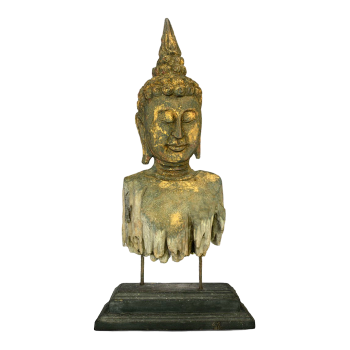
Thai cultural heritage gilded Buddha head wood carving

Thai cultural heritage gilded Buddha head wood carving

The highlight of this work of art is that it combines the charm of hand carving with traditional craftsmanship. The making of Buddha statues in Thailand is an expression of religious belief and a manifestation of cultural history.
India's Andaman and Nicobar Islands exorcism wood carving

India's Andaman and Nicobar Islands exorcism wood carving

This is an exorcism wood carving, created around 1900 AD, from the Andaman and Nicobar Islands near India. This wood carving is called kareau, which means "exorcist". Ceremonial healers made the statues, and local islanders believe they have magical protective powers. The Kareau statue is an important symbol of Andaman and Nicobar culture. These statues are usually carved from wood and are believed to be able to expel evil spirits or bad energy. They are often used in religious ceremonies or as amulets for families and communities. This statue reflects the deep belief of the islanders in the power of nature and spirituality.
Japanese Red Ghost Wooden Mask

Japanese Red Ghost Wooden Mask

Japanese fox wooden mask

Japanese fox wooden mask

Japanese Red Ghost Wooden Mask

Japanese Red Ghost Wooden Mask

Japanese Togou Wooden Mask

Japanese Togou Wooden Mask

A dog is a type of monster in Japanese folklore that has the shape of a half-human, half-bird, usually with a long nose and a red mask. The dog has a rich symbolic meaning in Japanese culture. It is regarded as a mountain god and protector, and is also regarded as a troublemaker and disaster-causing existence.
1 2 3 4 Next